Implementing Congestion Pricing in Chicago: Lessons from New York’s Program
Could it soon cost Chicago drivers more to access downtown areas? The possibility is being explored in light of New York City’s recent introduction of a congestion pricing program at the beginning of the year.
Chicago’s Consideration of Congestion Pricing
The potential program in Chicago aims to alleviate traffic congestion in the city, promote the use of public transportation, and generate additional revenue amid budgetary concerns. Drawing inspiration from New York’s model, Chicago Mayor Brandon Johnson is contemplating implementing a similar congestion pricing plan.
In a recent interview with Block Club Chicago, Mayor Johnson expressed his support for conversations surrounding congestion management and revenue generation, particularly from individuals who heavily utilize city resources but do not reside within the city. This initiative seeks to encourage a shift towards public transit usage and reduce reliance on personal vehicles.
Expert Insights on Congestion Pricing
Transportation expert Joe Schwieterman from DePaul University weighed in on the potential congestion pricing plan for Chicago. While acknowledging the need for such measures to address traffic congestion, he pointed out that Chicago’s circumstances differ from those of New York City. Schwieterman emphasized that any fees imposed in Chicago would likely need to be more moderate compared to New York’s $9 toll due to the city’s unique traffic patterns and infrastructure layout.
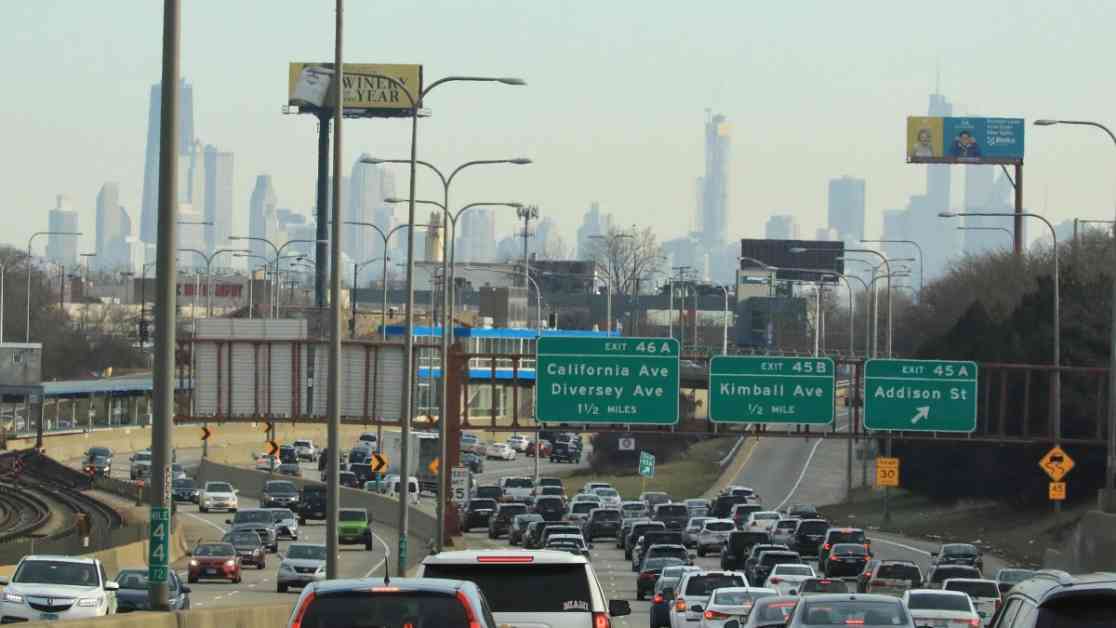
Schwieterman highlighted that Chicago’s most significant congestion issues are concentrated on expressways leading to the downtown area and the north lakefront region. As Chicago grapples with being the third most congested major city globally, with five of the ten most congested highways in the U.S., finding effective solutions to alleviate traffic congestion remains a pressing concern.
Public Sentiment and Past Proposals
Previous proposals, such as the idea of creating a toll-only lane on the Stevenson Expressway under former Governor Bruce Rauner’s administration, have been met with mixed reactions. While some Chicagoans are hopeful that congestion pricing could offer relief, others voiced concerns about the potential financial burden, particularly in challenging economic times.
As discussions around congestion pricing continue, Chicago residents and policymakers alike are poised to evaluate the feasibility and implications of such a program on the city’s transportation landscape. Whether Chicago will ultimately adopt congestion pricing remains to be seen, but the conversation surrounding innovative traffic management solutions is undoubtedly gaining momentum.
Adding a personal touch, think about the last time you were stuck in traffic and how frustrating it can be. Congestion pricing might offer a way to address these challenges, but it also raises questions about fairness and accessibility for all residents. How would you feel about paying a toll to drive into certain areas of your city? Share your thoughts and join the conversation about the future of transportation in Chicago.